Quick answer: A clay tennis court is a playing surface made from crushed shale, stone, or brick, prized for its slower ball speed, high bounce, and gentler impact on players’ joints. Clay courts come in two main types — red clay and green clay (Har-Tru) — each with distinct composition, playing characteristics, and maintenance needs.
Tennis courts come in several surface varieties, but few generate as much discussion among players and coaches as the clay tennis court. Recognized for its distinctive reddish-orange hue at tournaments like the French Open, clay is far more than an aesthetic choice. It’s a surface with a rich history, unique construction requirements, and playing characteristics that fundamentally change how the game is played.
Whether you’re researching clay tennis courts for academic purposes, comparing surface options, or simply curious about what makes this surface unique, this guide covers everything from historical origins to modern maintenance practices. We’ll break down the construction layers, compare clay to hard and grass courts, and explore the environmental considerations that come with this traditional playing surface.
By the end of this article, you’ll understand exactly what a clay tennis court is made of, how it behaves during play, what it takes to maintain one, and how it stacks up against alternative court surfaces.
What Is a Clay Tennis Court?
A clay tennis court is a playing surface constructed from crushed natural materials — typically shale, stone, brick, or a combination of these — layered to create a firm yet granular playing field. Unlike hard courts, which use asphalt or concrete, clay courts rely on compacted aggregate layers topped with a thin surface of fine, loose particles.
This composition creates a surface that plays noticeably slower than hard or grass courts. The ball loses momentum on impact and bounces higher, giving players more time to react and set up shots. Clay tennis courts are also known for producing visible ball marks, which are sometimes used to make line calls during matches — a feature unique to this surface type.
History and Origin of Clay Courts
Clay tennis courts trace their origins to 19th-century England, where the Renshaw brothers, top players of their era, reportedly created the first clay court by covering a hard court with crushed red brick to reduce glare and improve footing. The concept spread quickly across Europe, particularly in France, where clay became the dominant surface due to its suitability for the region’s climate and soil composition.
By the early 20th century, clay courts had become a staple across continental Europe and South America. The French Open, first held in 1891, has been played on red clay for most of its history and remains the most prominent clay-court event in professional tennis today. This deep-rooted tradition is part of why clay is often associated with European and Latin American tennis culture, where the surface continues to shape playing styles that emphasize patience, endurance, and tactical rallies.
How Clay Courts Are Constructed
Building a clay tennis court involves a layered system designed to balance drainage, stability, and consistent ball behavior. Unlike a single-layer surface, clay courts depend on multiple sublayers working together to support the top playing surface.
Base Layers and Sub-base
The foundation of a clay tennis court typically consists of several distinct layers:
- Drainage layer: A base of crushed stone or gravel, often 4–6 inches thick, that allows water to move away from the playing surface.
- Ash or clinker layer: A layer of compacted ash or similar material that provides structural stability and additional drainage.
- Stone dust or screenings layer: A finer aggregate layer that creates a smooth, compacted base for the top surface.
This sub-base structure is critical because clay courts are more susceptible to water pooling than hard courts. Proper layering ensures rainwater drains efficiently, reducing the risk of surface damage or unplayable conditions after wet weather.
The Clay Surface Layer
On top of the base layers sits the actual “clay” — though true clay is rarely used in modern construction due to its poor drainage properties. Instead, courts use crushed brick (for red clay) or crushed metabasalt (for green clay), applied in a thin layer typically less than an inch thick. This top layer is what gives the court its characteristic color, texture, and sliding capability.
Types of Clay Tennis Courts
Not all clay courts are the same. Two main variations exist, each with different materials, regional popularity, and playing characteristics.
Red Clay Courts
Red clay is the most recognized variation, famously used at the French Open. It’s made from crushed brick, which gives the surface its signature terracotta color. Red clay courts play slower than any other surface, produce a high bounce, and allow for extended sliding — a technique many clay-court specialists use to reach wide shots. Red clay is the traditional standard in Europe and South America.
Green Clay (Har-Tru) Courts
Green clay, commonly known by the brand name Har-Tru, is made from crushed metabasalt rock rather than brick. It’s more common in the United States and tends to play slightly faster and firmer than red clay. Green clay courts also drain faster after rain, making them a practical choice in regions with variable weather.
Advantages of Clay Tennis Courts
Clay tennis courts offer several benefits that explain their enduring popularity, particularly in regions with strong clay-court traditions:
- Lower injury risk: The softer surface reduces impact stress on joints, making it gentler on knees, ankles, and hips compared to hard courts.
- Slower ball speed: Extended rallies reward strategic play, patience, and consistency over raw power.
- Sliding capability: Players can slide into shots, a technique that aids in reaching wide balls without the same slipping risk found on other surfaces.
- Visible ball marks: Clay courts leave marks where the ball lands, which can help resolve close line calls.
- Aesthetic appeal: The traditional red or green color gives clay courts a distinct, visually appealing look, often associated with prestigious tournaments.
Disadvantages of Clay Tennis Courts
Despite their benefits, clay tennis courts come with notable trade-offs that facility owners and players should consider:
- High maintenance requirements: Clay courts need regular watering, rolling, and brushing to maintain consistent playing conditions.
- Weather sensitivity: Rain can make clay courts unplayable for extended periods, unlike hard courts that dry quickly.
- Higher long-term upkeep costs: Ongoing maintenance labor and materials add up over time compared to lower-maintenance surfaces.
- Surface inconsistency: Without proper care, clay courts can develop uneven spots, affecting ball bounce predictability.
- Seasonal limitations: In colder climates, clay courts often require off-season closure and reconstruction of the top layer each year.
Clay Tennis Court Maintenance
Maintaining a clay tennis court is significantly more involved than caring for a hard court. Consistent upkeep is essential to preserve playability and prevent long-term surface damage.
Daily Maintenance Routines
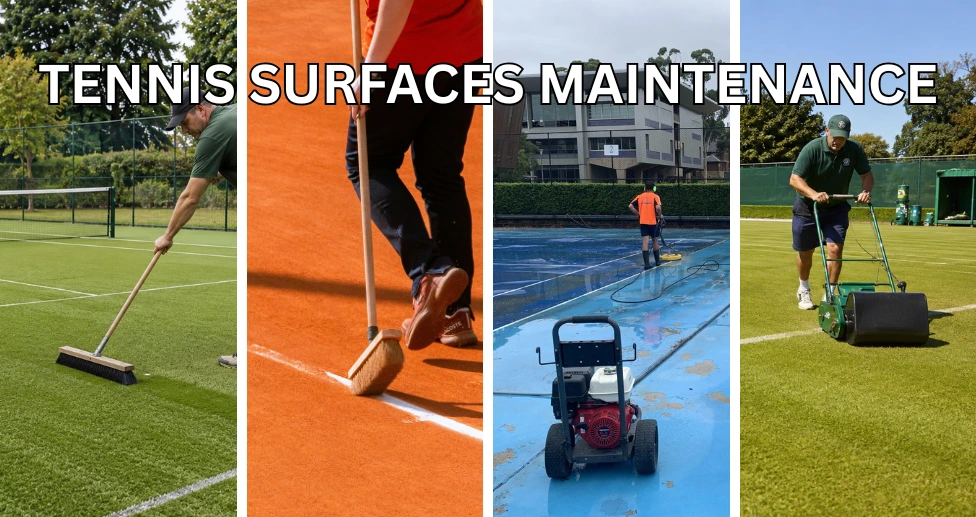
Daily care typically includes watering the surface to prevent excessive dust and maintain moisture balance, brushing the court to redistribute loose clay particles evenly, and sweeping away debris that accumulates from foot traffic. Courts in active use often require watering multiple times per day, especially in hot or dry climates, since dry clay becomes loose and unpredictable underfoot.
Seasonal Maintenance Tips
Beyond daily care, clay courts require more intensive seasonal attention. This often includes deep watering and rolling at the start of the playing season to compact the surface, periodic top-dressing with fresh clay material to replace worn areas, and line replacement or repainting as needed. In regions with freezing winters, courts may need to be covered or partially disassembled to prevent frost damage to the base layers, then rebuilt or refreshed before the next season begins.
Common Clay Court Problems and Fixes
Clay courts are prone to a few recurring issues. Low spots or depressions can form from repeated play in high-traffic zones like the baseline and service boxes, typically addressed through top-dressing and leveling. Excessive dryness leads to loose surface material and inconsistent bounce, which is resolved through more frequent watering. Weed growth along the edges is common in outdoor courts and requires regular removal to prevent root damage to the base layers. Addressing these issues promptly helps extend the usable life of the court and keeps playing conditions consistent.
Clay Court Playing Characteristics
The physical composition of a clay tennis court directly shapes how the game is played on it, influencing everything from shot selection to footwork technique.
Ball Bounce and Speed
Because clay is a looser, granular surface, it absorbs more of the ball’s forward momentum on impact, resulting in a higher, slower bounce compared to hard or grass courts. This gives players extra time to reach the ball and set up shots, which is why clay-court matches often feature longer rallies and more strategic point construction than matches on faster surfaces.
Player Movement and Footwork
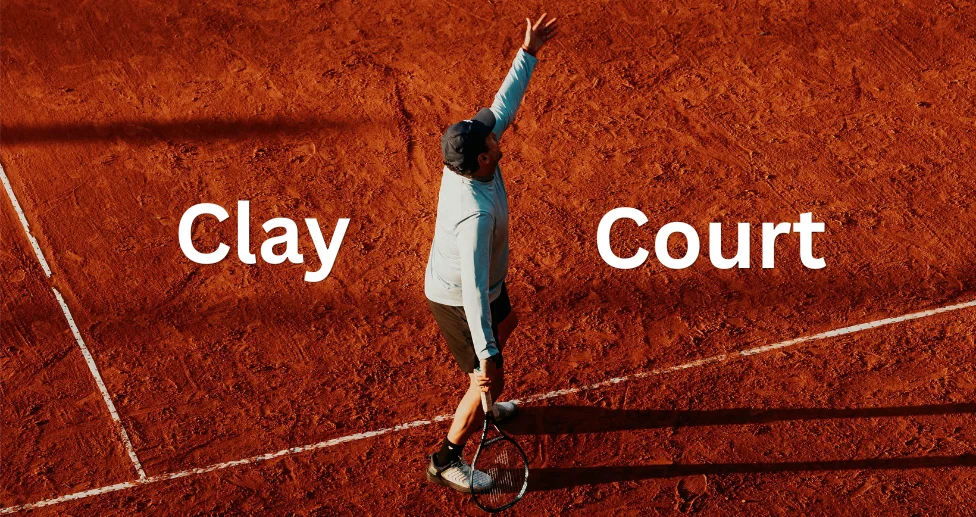
Clay courts allow for a distinctive sliding movement that isn’t as effective or safe on hard or grass surfaces. Players slide into shots to reach wide balls, then use that momentum to push back into position for the next shot. This requires a different footwork technique than the quick, choppy steps typically used on hard courts, and it’s a skill that takes considerable practice to master effectively.
Clay Tennis Court vs. Other Surfaces — Detailed Comparison
Choosing between clay, hard, natural grass, and artificial grass surfaces depends on priorities like maintenance capacity, climate, and desired playing style. Clay tennis courts suit facilities and players who value strategic, extended play and can accommodate higher maintenance demands. Hard courts are the better choice for those who need low upkeep and consistent year-round playability. Natural grass courts, while offering the fastest play, require the most intensive and specialized maintenance of all surfaces. Artificial grass courts offer a middle ground — they deliver a faster, low-bounce game similar to natural grass but with significantly reduced maintenance requirements, making them a practical option for clubs and recreational facilities seeking durability without the upkeep burden of natural turf.
| Factor | Clay Court | Hard Court | Natural Grass Court | Artificial Grass Court |
| Playing Speed | Slow | Medium-fast | Fast | Medium-fast |
| Bounce Consistency | Moderate (affected by wear) | High | Low | Medium-high |
| Maintenance Frequency | Daily | Minimal | Very high | Low |
| Weather Resistance | Low | High | Low | High |
| Cost Over Time | Moderate-high | Low | High | Low-moderate |
| Common Use | Clubs, clay-tradition regions | Public courts, academies | Elite tournaments | Recreational clubs, schools |
Clay Tennis Court Dimensions and Specifications
Regardless of surface type, official tennis court dimensions remain standardized by the International Tennis Federation (ITF). A clay tennis court follows the same measurements as hard or grass courts, with the surface material being the primary differentiator.
| Specification | Measurement |
| Overall Length | 78 feet (23.77 m) |
| Singles Width | 27 feet (8.23 m) |
| Doubles Width | 36 feet (10.97 m) |
| Service Box Length | 21 feet (6.4 m) |
| Net Height (center) | 3 feet (0.914 m) |
| Net Height (posts) | 3.5 feet (1.07 m) |
These standardized dimensions ensure that a clay tennis court offers the same competitive layout as any other surface, preserving fairness across surface types at every level of play.
Clay Court Footwear and Equipment Considerations
Playing on a clay tennis court requires different equipment considerations than hard or grass courts. Clay-specific tennis shoes feature a herringbone tread pattern rather than the flat or multidirectional patterns used on hard courts. This herringbone design allows for the controlled sliding that clay courts are known for, while also preventing clay particles from clogging the shoe’s sole. Using hard-court shoes on clay can reduce slide control and cause excessive clay buildup in the tread. Additionally, players often use a court brush or squeegee to clear excess clay from lines and playing areas between points, particularly after sliding shots disturb the surface.
Environmental Impact of Clay Tennis Courts
Clay tennis courts carry a distinct environmental profile compared to synthetic surfaces. On one hand, natural clay materials like crushed brick and stone avoid the petroleum-based inputs used in asphalt hard courts, and the surface itself is generally more permeable, allowing better natural water absorption than sealed hard courts. On the other hand, the frequent watering required for daily maintenance raises water consumption concerns, particularly in drought-prone regions. Facilities managing clay courts often need to weigh these water demands against the surface’s other environmental benefits, and some are exploring water-efficient irrigation systems to reduce the resource footprint while maintaining consistent playing conditions.
Frequently Asked Questions About Clay Tennis Courts
What is a clay tennis court made of?
A clay tennis court is made of layered materials, including a gravel drainage base, a compacted ash or stone dust layer, and a thin top layer of crushed brick (red clay) or crushed metabasalt (green clay).
Why do tennis players slide on clay courts?
Players slide on clay courts because the loose surface material reduces friction, allowing controlled sliding into shots — a technique that helps reach wide balls without the slipping risk found on other surfaces.
Is a clay tennis court slower than a hard court?
Yes, clay tennis courts play significantly slower than hard courts because the granular surface absorbs more ball momentum on impact, resulting in a higher and slower bounce.
How often does a clay tennis court need maintenance?
Clay tennis courts typically need daily watering and brushing, along with more intensive seasonal maintenance like top-dressing and rolling to keep the surface level and playable.
What’s the difference between red clay and green clay courts?
Red clay is made from crushed brick and plays slower with a higher bounce, while green clay (Har-Tru) is made from crushed metabasalt, drains faster, and plays slightly firmer and faster.
Final Thoughts on Clay Tennis Courts
A clay tennis court represents one of the most distinctive playing surfaces in the sport, shaped by over a century of tradition and a construction process built for strategic, extended play. From the layered base system to the fine top surface of crushed brick or metabasalt, every element of a clay court is designed to produce the slower pace, higher bounce, and sliding capability that define this playing style.
Whether you’re evaluating clay as a surface option, researching its construction for a facility project, or simply deepening your understanding of tennis court types, clay remains a surface worth understanding in depth — both for what it offers players and for the upkeep it demands from those who maintain it.
If you’re exploring clay tennis court materials or surface products for your own research or facility planning, feel free to reach out to TennisCourtFlooring with any product-related questions — we’re here to help you find the information you need.