tenniscourtflooring.com

Natural Grass Tennis Court Surface

Experience the tradition of tennis on natural grass courts. Discover their construction, grass varieties, ball behaviour, maintenance requirements, court drainage, Wimbledon history, and essential equipment.

What Is a Natural Grass Tennis Court?

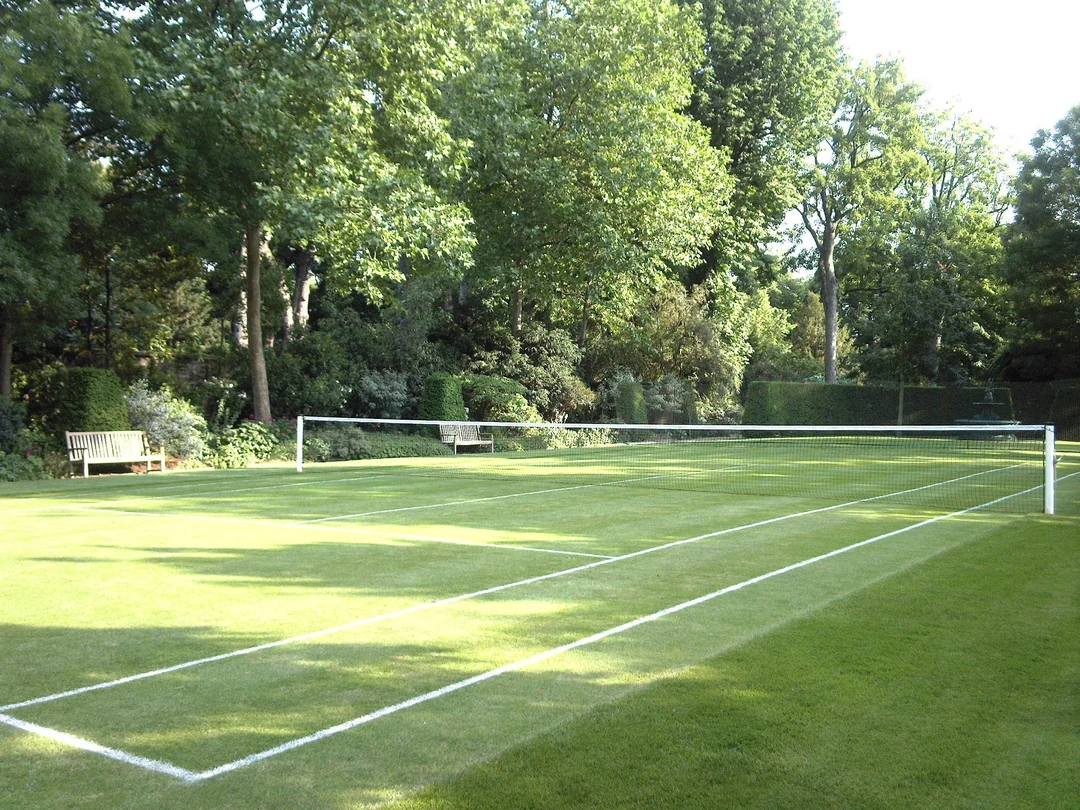
A natural grass tennis court is a playing surface made from real, living grass grown on a carefully prepared soil base. It is one of the oldest and most prestigious tennis court surfaces, known for its fast playing speed, low ball bounce, and traditional appearance.

A natural grass tennis court is a tennis playing surface made from real, living grass grown on a carefully prepared soil base. It is the oldest type of tennis court and is known for its classic appearance and premium playing experience. The surface offers fast ball speed with a low and quick bounce, making matches more challenging and exciting. Natural grass also provides a softer surface that reduces stress on players’ joints. However, it requires regular mowing, watering, fertilizing, and maintenance to keep the grass healthy and the playing conditions consistent. Due to its high maintenance needs, natural grass courts are less common than hard or clay courts but remain highly valued in professional tennis.

Types of Natural Grass Tennis Courts

Perennial Ryegrass

Perennial Ryegrass is the most widely used grass for professional tennis courts. It creates a dense, durable playing surface with excellent wear resistance and is the primary grass used at Wimbledon.

Kentucky Bluegrass

Kentucky Bluegrass forms a thick, soft turf with excellent self-repair capabilities. It performs well in cool climates and is often mixed with other grass species to improve durability and appearance.

Bermuda Grass

Bermuda Grass thrives in warm climates and offers outstanding heat and drought tolerance. Its rapid growth and quick recovery make it an excellent choice for outdoor tennis courts in tropical and subtropical regions.

Tennis Ball Behaviour on Natural Grass Courts

Natural grass courts produce a fast game with a low, skidding bounce. The surface rewards quick reactions, powerful serves, and aggressive net play.

Ball Type

Standard pressurized tennis balls are used on natural grass courts for consistent performance and control.

Ball Weight

The official ball weight is 56.0–59.4 g, providing balanced speed and stability during play.

Ball Diameter

A regulation tennis ball measures 6.54–6.86 cm in diameter, meeting official tennis standards.

Bounce Behaviour

The ball stays low and skids forward after bouncing, making returns more challenging.

Ball Speed

Grass is one of the fastest tennis surfaces, allowing the ball to travel quickly after each bounce.

Ball Longevity

The soft grass surface causes less wear on the ball, helping it maintain its felt and performance for longer.

Tennis Racquet on Natural Grass Courts

Natural grass courts are fast and produce a low ball bounce, so players benefit from racquets that offer quick handling, stability, and good touch for volleys and fast rallies.

Racquet Weight

A 280–305 g racquet provides a balance of speed, control, and easy maneuverability on fast grass courts.

Racquet Balance

A head-light balance helps players react quickly at the net and improves control during fast exchanges.

Head Size

A 98–100 sq. in. head size offers a good mix of precision and a forgiving sweet spot for low-bouncing shots.

String Pattern

An open string pattern (16×19) provides extra spin and power while maintaining good ball control.

Natural Grass Court Slope & Water Drainage

A properly designed slope is essential for a natural grass tennis court, helping rainwater drain quickly while protecting the grass and soil beneath. Combined with an efficient drainage system, the correct slope prevents waterlogging, preserves a firm and even playing surface, promotes healthy grass growth, and extends the overall lifespan of the court.

1. One-Direction Slope

A one-direction slope inclines the entire court gently toward one side. Rainwater flows in a single direction into the drainage system, making it suitable for smaller or recreational grass courts.

Best For:

Natural grass courts with a drainage channel installed along one edge.

2. Two-Direction / Crown Slope

A two-direction  slope has the highest point at the center of the court. Water drains evenly toward both sides, providing faster drainage & better surface protection. 

Best For:

Professional, academy, and tournament natural grass courts .

WHY IS COURT SLOPE IMPORTANT?

A properly designed slope is essential for keeping a natural grass tennis court healthy, safe, & playable. It allows rainwater to drain efficiently, preventing waterlogging that can damage the grass, soften the soil, & create slippery playing conditions. Proper drainage also helps maintain a firm, even surface for consistent ball bounce & longer turf life.

Prevents Waterlogging

Directs excess rainwater away from the grass surface, preventing puddles, soggy areas, and root damage.

Protects Natural Grass

Keeps the turf healthy by reducing excess moisture, preventing grass decay, soil erosion, and fungal growth.

Improves Player Safety

Maintains a firmer, drier surface that reduces the risk of slipping and provides safer, more stable movement throughout the game.

Maintains playing quality

Keeps the grass surface smooth and even, ensuring consistent ball bounce and reliable court performance.

Grand Slam Tournaments on Natural Grass Courts

Two of the four Grand Slam tournaments are played on acrylic hard courts. These tournaments offer consistent ball bounce, balanced court pace, and durable playing conditions, making them ideal for aggressive baseline players and all-court playing styles.

🇬🇧 Wimbledon

🎾 Surface

Natural Grass Court

⚡ Court Pace

Fast

📍 Location

London, England

Only one of the four Grand Slam tournaments is played on natural grass courts. Wimbledon is renowned for its fast court speed, low ball bounce, and rich tradition, making it the ultimate test of quick reflexes, powerful serves, and effective net play.

Frequently asked questions

Still have a questions?

Can’t find the answer you’re looking for? Visit our Contact page and send us your question using the contact form. We’ll review your query and consider adding it to our future guides and FAQ updates.

With proper maintenance, a natural grass tennis court can last 20–30 years or more, although the grass itself requires regular repair and periodic replacement to maintain optimal playing conditions.

The ideal grass height is typically 8–10 mm, providing consistent ball bounce, good traction, and healthy turf.

Wet grass becomes soft and slippery, increasing the risk of damage and player injury.

They are more expensive to build and require significantly more maintenance.

Regular mowing keeps the grass height consistent for predictable gameplay.

Scroll to Top